Monday, March 22, 2021

Advice from Owlie - Virtual Field Trips

Q: Dear Owlie,

Last school year, my class and I took a really fun field trip to the Chino Creek Wetlands and Educational Park! Since we are currently doing virtual learning, is there a way for my class to take a virtual field trip instead? I would love to share this information with my teacher!

Sincerely,

                                                          Park Pro

A: Dear Park Pro,

I am so glad you asked! Yes, IEUA offers virtual field trips through Owlie’s Virtual Adventures!

Scheduling a virtual field trip is as easy as scheduling one of our in-person field trips (which are not currently offered). First, visit the Owlie’s Virtual Adventures webpage on IEUA’s website and scroll down until you see the option to book a virtual field trip. From there, you will be redirected to a survey where your teacher can choose the type of field trip (fully pre-recorded or a hybrid of pre-recordings with a live Q&A), the activities that best fit their curriculum and grade level as well as the date and time. Once they click submit, a member of our team will reach out to them with any materials or information they might need and then they’re good to go! How coo(HOO)l is that!

I hope to see you and your class in a virtual field trip soon and be sure to come back and let me know how it was afterwards!

Talk to you all soo(HOO)n!

Owlie

Thursday, February 18, 2021

Advice From Owlie - How to Become a Water Scout

Hi everyone! This month’s post is an exciting one! For the past couple of months, my good friends at the Inland Empire Utilities Agency and I have been working together to offer a brand new badge program for Boy Scouts and Girl Scouts called… the Water Scout Badge Program! Woo(HOO)!

The Water Scout Badge Program is a fun way to learn all about our water resources, water conservation methods, environmental stewardship, native plants, and even takes you on an exciting scavenger hunt through the Chino Creek Wetlands and Educational Park. (My favorite part of the book!) Plus, once you’ve completed the workbook, you’ll receive your very own Water Scout badge and become a certified Water Scout!

To take advantage of this new program and earn your Water Scout badge, download the Water Scout Workbook from IEUA’s website. Be sure to check out the other programs offered through Owlie’s Virtual Adventures, too!  

I can’t wait to see all of your smiling faces at the park! While you’re there,
please be sure to stay safe by adhering to local safety guidelines.

Have fun on your journey to become a Water Scout and I’ll talk to you soo(HOO)n!

Owlie
 

Wednesday, January 27, 2021

Advice From Owlie - Sage

Q: Dear Owlie,

What is your favorite plant at the Chino Creek Wetlands? Mine is the sage because of its refreshing scent! Do you have any of those at the park?

Sincerely,

Petal to the Metal


A: Dear Petal to the Metal,

That’s a great question! It’s hard to pick a favorite plant, but I’d have to agree that sage is one of my favorites! In fact, the park is home to both white sage and purple sage, so you’ll surely see sage upon your next visit!

Sage is actually quite interesting. Did you know white sage is part of the “mint” family? Many Native American tribes in the region considered it to be a sacred plant that cleanses, purifies and provides protection. The leaves of the plant are whitish-green and when you rub them between your thumb and forefinger, a refreshing, cleansing scent is released, which is the same scent you mentioned! Native Americans used this to make medicines for many illnesses and to ward off negative energy.

Who knew one plant could have so much history? Thank you for the great question!

Talk to you all soo(HOO)n!

Owlie


Tuesday, November 24, 2020

Advice From Owlie - American Coot

 Q: Dear Owlie,

Do you have any fun facts to share about the animals I might see at the park? I’m planning to visit with my family soon and want to be able to share some of this information with them!

Sincerely,

Animal Lover


A: Dear Animal Lover,

I can’t wait to see you and your family at the park! The Chino Creek Wetlands is home to a wide variety of animal species, but one of my favorites is definitely the American Coot.

The American Coot is easily distinguished from other ducks and birds due to its dark black feathers and white beak. While you’ll likely spot the American Coot swimming in one of our ponds, the American Coot is not a duck, it is actually a bird! We know this because unlike ducks, the American Coot does not have webbed feet. Instead, they have long toes which help them effortlessly paddle through the water.

During the warmer months, you can find the American Coot snacking on the duckweed floating on top of the ponds, but in the colder months when the duckweed tends to sink to the bottom, American Coots may be seen feasting on other plants or insects.

Let me know if you or your family happen to spot an American Coot on your visit to the park and be sure to follow safety guidelines while you’re there!

Talk to you all soo(HOO)n!

Owlie


Thursday, October 29, 2020

Advice From Owlie - Bird Bingo At-Home Activity

Hello everyone! I am very excited to announce that my friends at the Chino Creek Wetlands and Educational Park have posted yet another at-home activity video on IEUA’s YouTube channel. And I must say, it’s one of my favorites!

This new video is the perfect tool to guide you through the Bird Bingo at-home activity that you can find on IEUA’s website. It’s a great way to learn about the different types of birds you would encounter at the wetlands and the different traits and distinguishing characteristics of each bird. Plus, you might even see a special guest appearance from yours truly!

If you haven’t had the chance to check out our Plant Factory at-home activity video, make sure to do so while you’re there and leave a comment letting IEUA know that I sent you. Keep an eye out for more at-home activity videos coming very soon!

Happy gaming to all! I’ll talk to you soo(HOO)n!

Owlie

Monday, September 28, 2020

Advice From Owlie - All About Plants

Q: Dear Owlie,

Lately, I’ve been really interested in learning about plants. In fact, my family and I want to start a garden of our own in our backyard! Are there any cool facts about plants that you can teach me? Thank you Owlie!

Sincerely,
Sunflower Power

A: Dear Sunflower Power,

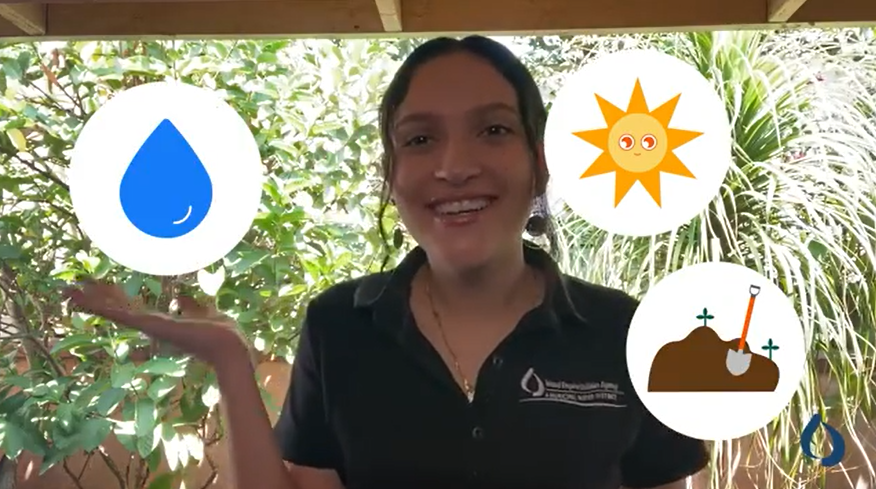
I love the idea of growing a garden in your backyard! While plants may not seem complex, there are a lot of interesting facts about plants that most people might not know. For example, did you know that a plant is made up of five parts? The first part are the roots. Each plant has roots that absorb nutrients from the soil. A plant also has leaves that supply the plant with food through a process called photosynthesis. Yes, even plants need to eat! Next, each plant has a stem. The stem ensures that the plant stands upright and has the important job of delivering any nutrients absorbed by the roots. On top of each stem sometimes sits a flower. However, not all plants have flowers! Flowering plants produce seeds within a fruit and are the reproductive organs of the plant. For a plant to reproduce, insects and birds must first pollinate it. Finally, we have the seeds. When pollinated, seeds produce yummy fruit for humans and animals to enjoy.

For even more information on plants, be sure to check out IEUA’s Plant Factory video on YouTube! Their team shares some really great information about our flowery friends and guides you through the Plant Factory at-home activity available on their website.

Hopefully this information is something you can share with your family while you plant your garden! Also, talk to your family about planting water-wise plants such as lavender, poppies and sage since they’ll survive much better in California’s warm weather and require a lot less water!

 I’ll talk to you all soo(HOO)n!

 Owlie


Tuesday, August 18, 2020

Advice From Owlie - Wastewater Treatment Process

Q: Dear Owlie,

Since school is back in session, I’ve been thinking about the Water Discovery Field Trip my class and I took last year to IEUA’s Regional Water Recycling Plant No. 5. Would you mind giving me a recap of the wastewater treatment process? I’d love to share this information with my new classmates.

Sincerely,

H20 Hero

A: Dear H20 Hero,

Welcome back to school! I’d be happy to recap the wastewater treatment process for you and your classmates. In fact, with August being Water Quality Month, I can’t think of a better time to do so!

Wastewater is treated through a five-step process. The first step is the preliminary treatment. In this step, wastewater collected from various households travels via underground pipes to our water recycling plants. However, wastewater doesn’t just consist of used water from our toilets, it can also come from showers, sinks, washing machines and more. Once it gets to our recycling plant, large rakes are used to separate any trash and large debris from the water.

From there, the water heads over to the next step- primary treatment. Once all the trash and debris are separated from the water, it is treated with a substance called ferric chloride. Ferric chloride is a chemical that helps solids (yes, poop!) settle to the bottom of the tank for removal. At the top, large rakes skim the surface of the water to remove any fats, oils and greases, also known as FOG.

After primary treatment comes secondary treatment. This is where tiny microorganisms eat away at the remaining solids in the wastewater. Don’t worry, they love it!

Following secondary treatment is tertiary treatment where the water passes through a filter to remove any solids the microorganisms may have missed.

Finally, sodium hypochlorite, a super charged bleach, is injected into the water to remove any pathogens. Once the water has been exposed to the sodium hypochlorite for at least 90 minutes, it is distributed into purple pipes for irrigation at golf courses, homes and for groundwater recharge purposes.

For a full behind the scenes tour of Regional Water Recycling Plant No. 5, be sure to check out our YouTube channel. With all this information, you’re sure to be a recycled water pro!

Talk to you all soo(HOO)n!

Owlie